
Matthew 2:1-12, NRSV
After Jesus was born in Bethlehem in the territory of Judea during the rule of King Herod, magi came from the east to Jerusalem. They asked, “Where is the newborn king of the Jews? We’ve seen his star in the east, and we’ve come to honor him.”
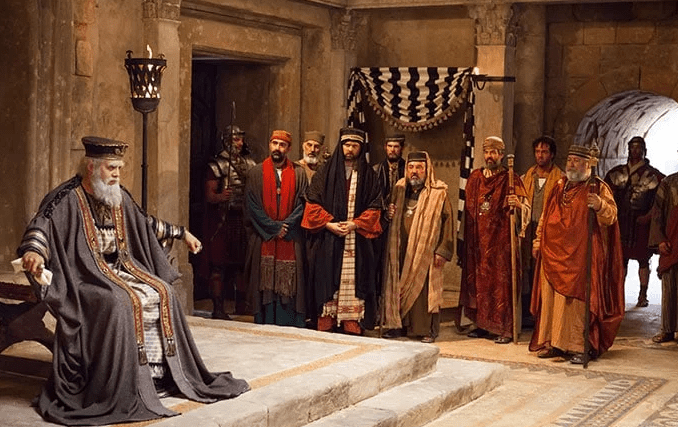
When King Herod heard this, he was troubled, and everyone in Jerusalem was troubled with him. He gathered all the chief priests and the legal experts and asked them where the Christ was to be born. They said, “In Bethlehem of Judea, for this is what the prophet wrote:
You, Bethlehem, land of Judah,
by no means are you least among the rulers of Judah,
because from you will come one who governs,
who will shepherd my people Israel.”[a]
Then Herod secretly called for the magi and found out from them the time when the star had first appeared. He sent them to Bethlehem, saying, “Go and search carefully for the child. When you’ve found him, report to me so that I too may go and honor him.” When they heard the king, they went; and look, the star they had seen in the east went ahead of them until it stood over the place where the child was. When they saw the star, they were filled with joy. They entered the house and saw the child with Mary his mother. Falling to their knees, they honored him. Then they opened their treasure chests and presented him with gifts of gold, frankincense, and myrrh. Because they were warned in a dream not to return to Herod, they went back to their own country by another route.
Today, we have two divergent responses to the birth of the long-awaited Christ. Often, when we encounter two responses like this, we like to embody the positive response. In this case, we say something like this the following to ourselves.
“I’d be like the wise men. I would choose to go and worship.”
I like to encourage us to intentionally choose not to do that. I’d invite us to ask ourselves a hard, perhaps even threatening, question. How are we like Herod? Herod was a man who, though he enjoyed power of being a king, his power was tentative. He was in power as long as it was convenient for the Emperor of Rome. Herod was almost surely aware of this, so he ruled the Jewish state with uneasy confidence. Enter a child “born to be the King of the Jews.” I’m sure you can imagine Herod’s lack of excitement at the birth of child foretold to take his throne. Now Herod’s power is even more tentative. It is threatened from both sides.
As far as I know, nobody reading this is a king. But all of us have little “kingdoms” over which we “rule.” Maybe it’s our position in the family, at work, in some organization to which we belong or even at church. There are small domains in each of our lives where we get to call the shots. If nothing else, we have moments each day where we can choose what to do for ourselves. These domains might seem more than a little tentative at times, but still, we all rule tiny kingdoms.
What happens when someone comes along who seems to threaten our “kingdom? Maybe people are talking about them when they used to talk about us. Maybe we imagine the new person means to usurp the power we have. Or maybe we recognize just how wonderful the new girl is and it seems like only a matter of time before others recognize it as well. They will start following her instead of us. How do we respond when our power/influence, however much or little of it we have, seems to be usurped by another.
The cosmic irony of this passage is that the child creating this fear and hatred in Herod is God become flesh. The very fact that God has become human illustrates that instead of trying to protect infinite power, God willingly gives it up to show humanity another way. The wise men, powerful as they may be, recognize this and respond with worship and gifts. This Child, who is God, will eventually submit fully to earthly power and be crucified on a cross. In doing this, God accomplishes a victory over all earthly powers by the power of divine Love. The great king Herod becomes a footnote in the story of God’s redemptive love story.
We risk the same fate when we react to others out of jealousy, defensiveness and/or resentment. Jesus becomes Love Incarnate in part to show us how we can live that way too. This leads us to our question for the day. Be brutally honest with yourself as you consider it.
Question: Are there any current situations where I am acting out of jealousy, defensiveness, and/or resentment instead of love?
Prayer: God, thank you for showing us what real power is – the power of Your Love. May be seek this power as we let go of our grip on our tiny kingdoms. Amen.
Prayer Focus: This may be hard, but pray for someone you sense is abusing the power they have been given.
Song: By My Spirit – Leslie Phillips
 Weekday Word w/ Eric
Leave a comment