
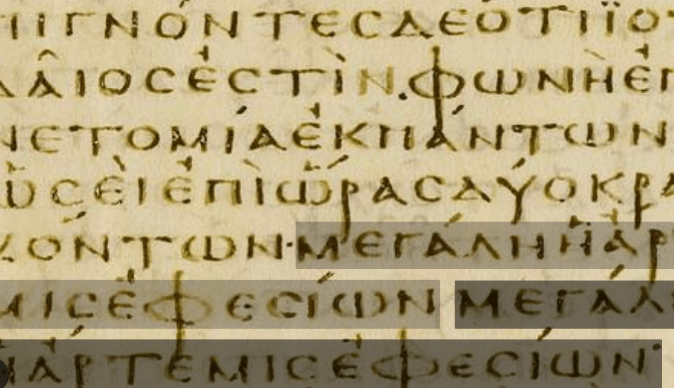
John 7:53-8:12, CEB
They each went to their own homes,
And Jesus went to the Mount of Olives. Early in the morning he returned to the temple. All the people gathered around him, and he sat down and taught them. The legal experts and Pharisees brought a woman caught in adultery. Placing her in the center of the group, they said to Jesus, “Teacher, this woman was caught in the act of committing adultery. In the Law, Moses commanded us to stone women like this. What do you say?” They said this to test him, because they wanted a reason to bring an accusation against him. Jesus bent down and wrote on the ground with his finger.
They continued to question him, so he stood up and replied, “Whoever hasn’t sinned should throw the first stone.” Bending down again, he wrote on the ground. Those who heard him went away, one by one, beginning with the elders. Finally, only Jesus and the woman were left in the middle of the crowd.
Jesus stood up and said to her, “Woman, where are they? Is there no one to condemn you?”
She said, “No one, sir.”
Jesus said, “Neither do I condemn you. Go, and from now on, don’t sin anymore.”
The above passage is arguably the most famous textual variant in the Bible. A textual variant occurs when different ancient manuscripts from which translators render a bible translation differ from one another. When creating a new bible translation from scratch, translators like to use the oldest available manuscripts from which to translate. This helps to ensure that there are the fewest possible scribal errors as copies were made (painstakingly by hand). They like to check as many early manuscripts as possible to ensure that the manuscripts have the same text. When different manuscripts have different texts for the same verse, the result is called a textual variant. Translators then have to make a decision about which manuscript is most reliable and create their new translation from that. In most modern translations, these textual variants will be footnoted to alert the reader that were other possible translations.
So, John 7:53-8:11 is one of the most famous examples of a textual variant because the entire passage is missing from ALL of the earliest and most reliable manuscripts. It doesn’t show up in manuscripts until those created in the 4th through 8th centuries CE, so 400 to 800 years after Christ. An overwhelming consensus among biblical scholars is that this well-loved story about Christ and the woman caught in adultery was never a part of the original Gospel of John. Recently, some biblical scholars have made a case that if this story belongs to any gospel writer, it would be Luke. But there is, by no means, general consensus on that hypothesis. In any case, we can pretty solidly conclude that this story does not belong in the Bible that became the agreed-upon scriptures among Christians.
So what now? Are we to assume that this event with the woman caught in adultery never happened? Not necessarily. Many scholars believe that it is likely that this was a popular story about Jesus that was transmitted orally for a long time until someone decided to include it in a manuscript of John. Because it was (and still is) a much beloved story, it continued to be included in future manuscripts.
Why am I telling you all this? I do so for a couple of reasons. The first one is simple. Because we have undertaken a devotional commentary on the Gospel of John and I am convinced by the evidence that this story has no business in John, I will not be commenting on the story itself here. The second reason is to illustrate just a small part of the complexity in which the book that we know as the Bible came to us in it’s present form. It is an all-too-human process with documented human errors and omissions. Nevertheless, God continues to speak to and inspire us in the midst of all this human messiness. Even this story that is not in our earliest “bibles” has profoundly been used by God to speak the truth about Jesus. But that’s a devotional for another time.
Question: Does knowing more about the details behind how the Bible came to us affect how you see scripture? Why or why not?
Prayer: God, speak to us Your truth in whatever form or experience you wish. Help us to listen. Amen.
Prayer Focus: Pray for the work bible scholars and archeologists.
Song: The B-I-B-L-E Song – Kids Worship
 Weekday Word w/ Eric
Leave a comment