
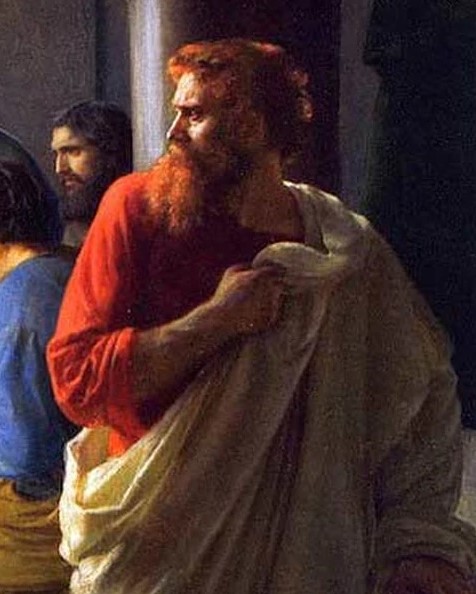
Matthew 27:1-10, NIV – Early in the morning, all the chief priests and the elders of the people made their plans how to have Jesus executed. So they bound him, led him away and handed him over to Pilate the governor.
When Judas, who had betrayed him, saw that Jesus was condemned, he was seized with remorse and returned the thirty pieces of silver to the chief priests and the elders. “I have sinned,” he said, “for I have betrayed innocent blood.”
“What is that to us?” they replied. “That’s your responsibility.”
So Judas threw the money into the temple and left. Then he went away and hanged himself.
The chief priests picked up the coins and said, “It is against the law to put this into the treasury, since it is blood money.” So they decided to use the money to buy the potter’s field as a burial place for foreigners. That is why it has been called the Field of Blood to this day. Then what was spoken by Jeremiah the prophet was fulfilled: “They took the thirty pieces of silver, the price set on him by the people of Israel, and they used them to buy the potter’s field, as the Lord commanded me.”
It is striking the way Matthew draws comparisons and contrasts between the chief priests and Judas in their reaction to Jesus’s innocence. Both Judas and the Priests are complicit in Jesus’s fate. Both at least admit Jesus’s innocence. And they both pronounce sentences. The priests, of course, doubled-down on their complicity to kill Jesus and turn Him over to Pilate who is the only one with power to execute. And Judas, overwhelmed with guilt for his role in this tragic plot, pronounces conviction and death sentence on himself for betraying an innocent man. These are the similarities.
Within those similarities, Matthew has highlighted some stark contrasts. The judgement of the chief priests have nothing to do with justice; they are simply trying to eliminate what they believe to a threat to their power and position. Judas suicide is an effort to mete out justice upon himself for his crimes. Judas gives up the money he was paid for his betrayal because he wants no benefit for his duplicity. The priests, even though they know it is blood money, use it for their own interests while skirting the regulations that govern the use of such currency.
Both the priests and Judas were wrong in their actions. The evil of the priests is more apparent with their self-interest and their blatant disregard for justice. They absolve themselves of all responsibility for their treachery and they make schemes to get around the regulations governing them to accomplish their dark goals. Judas takes the matters of judgement into his own hands, a power he has not been given by the law or by God. Confessing his sin and trying to make amends (return the money) were the right things to do, but killing himself was not. Both the priests and Judas left God out of the equation. The priests made a mockery of God’s justice and Judas denies God’s mercy, forgiveness, redemption and love.
But here is the most amazing thing about all of this; God’s providence is seen even in all the betrayals of God’s justice and redemption. The priests unknowingly participate in the plan of God by turning over Jesus to Pilate. Their use of the blood money unknowingly fulfills prophecy made hundreds of years before by God’s messenger Jeremiah. The treachery of the priests becomes a tool in the hand of God for the redemption of all people. And though Judas carries out capital punishment upon himself, there is even still, the possibility of his redemption in eternity by a God whose “yes” is stronger than any “no.” Though God would never condone suicide, God’s love is capable of superceding it. The priests and Judas cannot thwart the providence of the Almighty.
Let us resolve to avoid the mistakes of the priests and of Judas. Let us not take the justice of God into our own hands. Let us not presume to know the limits of God’s love, mercy and forgiveness. Let us accept that God’s plan will prevail whether we cooperate with it or not. Let us let God, and God alone, be God.
Questions: Have you ever acted as if you knew better than God what was necessary in a given situation? Have you ever pronounced a sentence upon yourself with no thought God that somehow, God could bring redemption from even the worst of your mistakes?
Prayer: Sovereign God, forgive us when we leave you out of the circumstances of our lives and relationships. Help us to more fully trust your providence, justice, and love. Amen.
Prayer Focus: Pray for the souls and families of those who have taken their own lives.
Song: Hand of Providence – Michael W. Smith

 Weekday Word w/ Eric
Leave a reply to Christian Talk With Georgios Mitrakos Cancel reply